


The Real Math Behind Slot RTP (And Why It Matters Less Than You Think)
Every slot player has heard the magic number: 96%. It gets thrown around in reviews, forum arguments, and casino lobby filters like it's the single score that…

Every slot player has heard the magic number: 96%. It gets thrown around in reviews, forum arguments, and casino lobby filters like it's the single score that separates a good game from a bad one. But spend an afternoon actually testing this belief and something uncomfortable emerges — RTP is one of the least useful numbers in your decision-making toolkit, at least the way most players use it. Let's break down what the return-to-player figure really means, where it breaks down, and what deserves more of your attention.
What RTP Actually Measures
Return to player is a theoretical percentage of all money wagered on a slot machine over an enormous number of spins that eventually flows back to players. A game with a 96% RTP keeps 4% for the house in the long run. Sounds straightforward. The trap is that "the long run" isn't hours or weeks — it's millions of spins, often billions depending on volatility. L'Avenue Dubai offers a practical breakdown of the topic.
Consider two sessions on the same 96% game. Player A buys in for $100, spins $1 stakes, and cashes out $340 after a hot run. Player B dozes through a feature drought and leaves with $12. Both had identical RTP. The number describes the machine across an impossibly large sample, not your evening. It's a statistical description of an ocean; you're one wave.
Still, RTP isn't irrelevant. Over hundreds of hours, low-RTP games will grind you down faster than high-RTP ones. The difference between a 94% game and a 97% game is $3 per $100 wagered — small per session, brutal across a year of regular play.
Where the Number Gets Fuzzy
Here's the part reviews gloss over: the RTP printed in the help screen is computed under specific assumptions.
- Optimal strategy matters. On slots with skill elements (Hold & Win respins where you choose symbols, or games with gamble features), the stated RTP assumes you play correctly. Play badly and reality diverges.
- Progressive contributions are sometimes excluded. A game might advertise 96% but contribute 1% to a jackpot you'll almost certainly never hit, meaning your realistic RTP is closer to 95%.
- Jackpot games often have low base RTP because the top prize distorts the average. A 92% RTP machine with a $2 million jackpot pays out much less smoothly than a 96% game with modest max wins.
- Versions differ by jurisdiction. The same title can run at 96.2% on one operator and 94.5% on another. Always check the in-game info panel, not the marketing page.
Volatility Is the Number You Actually Feel
If RTP is the ocean, volatility is the waves — and waves are what sink your bankroll. Volatility describes how much results swing around that average.
A low-volatility slot pays small, frequent wins. A 95% RTP low-vol game might keep you grinding for hours on a $50 balance. A high-volatility 96% game with the same balance can wipe you out in 15 minutes and then pay 5,000x on the next spin you never made.
This has a real, practical consequence: match volatility to your bankroll and temperament, not to the RTP leaderboard.
- Small bankroll, want session length? Low to medium volatility.
- Chasing a big score and comfortable losing the deposit? High volatility.
- Grinding bonuses with wagering requirements? Medium volatility usually converts most reliably, since bonus terms often cap max bet and max win.
Casino Games, Betting, and Poker: Different Math, Same Discipline
Slots aren't the only place where players misread the numbers.
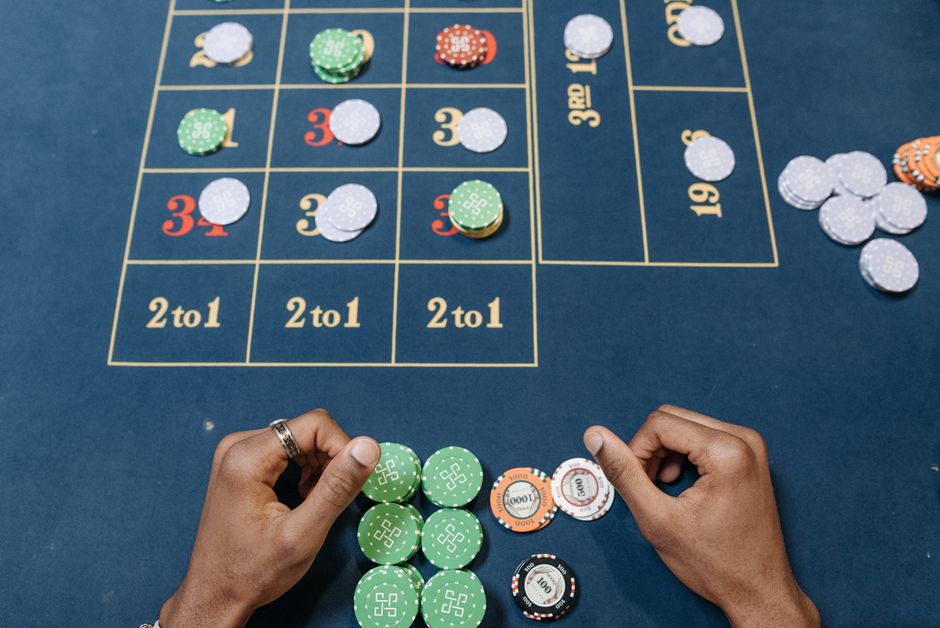
In table games, house edge is transparent and stable. Blackjack with basic strategy sits around 0.5% — better than almost any slot. Baccarat's banker bet runs about 1.06%. Roulette swings from 2.7% (European, single zero) to 5.26% (American, double zero). Here, RTP genuinely is the headline number because the game is measurable and repeatable.
In sports betting, the equivalent is the margin (vig). A standard two-way market at -110/-110 carries roughly a 4.5% hold. Sharp books run thinner margins; recreational books fatten them. Line shopping across three or four books can shave 1-2% of edge, which over a season is enormous.
In poker, you're not playing the house — you're playing other people, minus a rake. That's the crucial distinction. A skilled poker player can have a positive expected value; no slot player ever does. Most cash games rake 5% capped at $3-5, and tournaments take 8-12% off the top. Track your own results, not theoretical numbers.
Five Things to Check Instead of Obsessing Over RTP
- Maximum win and win cap. A 96% game that caps wins at 2,500x is a very different beast from one allowing 50,000x.
- Bonus terms. Wagering requirements of 40x on a 100% match with max bet limits can eviscerate apparent value. Read the fine print before depositing.
- Payout speed and licensing. A game with lovely RTP at a casino that takes nine days to pay is a worse deal than a 95% game at an operator that pays in an hour.
- Session budget and stop-loss. Decide before you spin. This is the only variable you fully control.
- Your actual results over months. Track deposits and withdrawals. Data beats theory.
A Healthier Way to Read the Numbers
RTP, house edge, volatility, rake, margin — these aren't marketing stickers, they're diagnostic tools. Use them to weed out genuinely bad products, not to find a guaranteed edge that doesn't exist. A 97% slot is not a 3% loss any more than a 92% slot is an 8% loss; your personal outcome on any given night is dominated by variance, and over a lifetime it converges toward the theoretical figure because the underlying math is unforgiving.
The players who last longest aren't the ones who found a magic 99% game. They're the ones who treated gambling as entertainment with a known, accepted cost, sized their bets sensibly, and walked away when the plan said so. Understanding the math doesn't change the math. It just means you stop being surprised by it — and that's worth more than any percentage in a help menu.